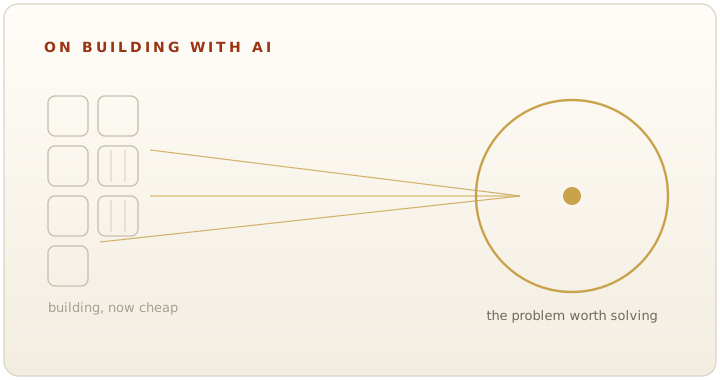
Here is something worth noticing about AI-assisted building. The people getting the most out of it are not always the strongest coders. Often they are people with a different set of traits entirely.
The claim is simple. As AI takes over more of the actual writing of code, the skills that decide who builds great products are no longer mostly technical. The two that matter most are problem-first thinking and real empathy for the people you build for. Coding still matters. It just stopped being the thing that separates good builders from great ones.
The reason is not sentimental. It is mechanical.
AI made building cheap
Turning an idea into working code used to be slow and expensive. That cost is now close to zero. And when building gets cheap, the hard part moves somewhere else. It moves to choosing what to build and why.
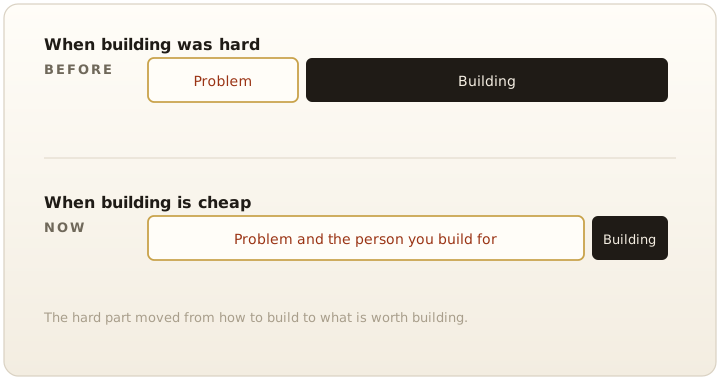
So the floor rises for everyone. Mediocre builders get faster. But the ceiling rises only for people who know what to do with the time they just got back.
Two builders, same tool
Picture two good engineers. Same AI agent. Same task: build a feature that lets users export their data.
The first one starts right away. Export means a button, a file, a download. The agent is great at this, and within an hour it ships. It works. A year ago this took a week. This is a real win.
The second one pauses on a question the first one skipped. Why do people want to export their data? Building is cheap now, so asking costs almost nothing. The answer turns out to be messy. Some users are leaving for a competitor. Some are building their own reports because the built-in analytics are too thin. Some just want a backup because they are not sure the data will be there next month. Three different problems hiding inside one request.
The second builder ships an export too, on about the same timeline. But it is shaped by what they learned. It catches the users who were leaving. It flags the reporting gap to the product team. It reassures the nervous ones.
Now look ahead.
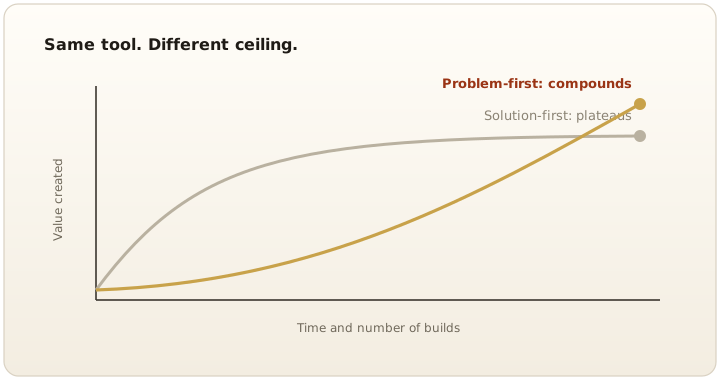
The first builder finished a task and is waiting for the next ticket. The second finished a task and found three new things the product is missing. One of them becomes next quarter’s biggest bet. Both shipped. One plateaus. One compounds.
The difference was not talent. It was where their attention went once the tool gave them room to choose.
What actually separated them
Two traits.
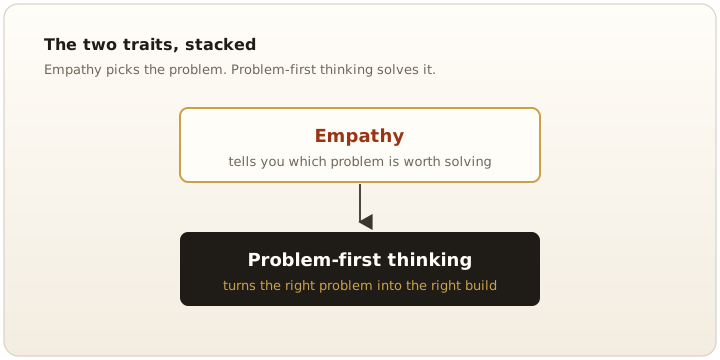
Problem-first thinking. Sitting with the problem before reaching for a solution. Asking what is really being requested, and why. Before AI, this was a luxury, because building ate all your time. Now building is cheap, so the time you spend understanding the problem is the best time you have.
Empathy. This is what tells you which problem is worth solving in the first place. It is how the second builder knew to ask why people were exporting, and how they heard three needs inside one request. You do not get there from the ticket. You get there by caring what the person is actually trying to do.
Two more traits help: saying clearly what you want, because an AI agent rewards clear direction and punishes vague direction, and treating AI like a teammate you delegate to and review, not just a tool you operate. Both matter. Both come more easily once you have the first two.
The good news: these are learnable
None of this is innate. They are habits.
Before you build, write the problem in one sentence with no solution in it. If you cannot, you do not understand it yet. When a request comes in, ask why twice before you ask how. Spend some of the time the agent gave you talking to the people who will use the thing. After you ship, ask what you learned about the user, not just whether it works. And notice that what the agent gives back is a mirror of how clearly you asked.
The builders who win the next few years will not be the ones who write code fastest. The agent already does that. They will be the ones who moved their attention from how to build to what is worth building, and for whom.
Comments